ROBERT EDWARD LEE
Robert Edward Lee was born on the 19th of January, 1807, in Westmoreland county, Virginia. In this county George Washington, too, was born. Not many miles away were born Sam Houston and Stephen F. Austin. When Lee came into, the world, Washington had been dead seven years, and Houston and Austin were boys fourteen years old.
Robert's father was General Henry Lee. He fought with Washington in the great war that made our country free from England. He was sometimes called "Light Horse Harry Lee." He got this name from being the leader of a band of fast-riding soldiers known as the "Light Horse Legion."
It was General Henry Lee who said of Washington that he was "First in war, first in peace, and first in the hearts of his countrymen."
Robert had two brothers, Charles and Sidney, and two sisters, Anne and Mildred. When Robert was four years old, his father moved from his country home to the little city of Alexandria to send his children to school.
[Lee's service on the Texas frontier and the incident at the battle of the Wilderness are considered a sufficient warrant for placing the story of his life in Texas History Stories.]
The school to which Robert was sent was kept in a queer little yellow house. Because the walls were yellow the boys called the house "Brimstone Castle."
Robert's father was not well and was away from home much of the time, hunting for health. In one of his letters home he said, "Tell me about Anne. Has she grown tall? Robert was always good."
No more manly boy than Robert could be found in all the country round. He was brave, kind-hearted and true, and everybody loved him. He was gentle and thoughtful of his mother, and did everything he could to help her. When she was sick he took the keys and "kept house" for her.
He was a good boy at school, was polite and respectful to his teachers, was careful to obey the rules, was always on time and never failed in a single recitation.
WhenRobert was eleven year sold his father died. The family stayed at Alexandria, and Robert was kept at school till he was eighteen years old. During all these years he was thinking of what he might do, when he be came a man. He hoped to become a soldier like his father. He, too, would command a "light-horse legion" and fight for his country.
At West Point, New York, there is a great school where young men are trained to become soldiers. To this school Robert went when he was eighteen years of age. Here, as at "Brimstone Castle," he made a good name for himself. He stayed here four years, and in all this time he never got a bad mark. In his studies none stood higher. On the drill grounds he carried himself like a soldier and seldom made a mistake. He was careful of his dress, and in his gray and. white soldier suit he looked the perfect gentleman. It is said that he kept his gun so bright that the inspecting officer could see his face in its barrel. He was graduated in 1829, standing second in his class. He was now made a lieutenant in the United States army.
You may be-sure his mother was very proud of him when he returned home. Such a handsome, brave, manly fellow he was. And how glad he was to be at home again with his dear mother! To him home was a sacred place, and mother the sweetest word known.
How delightful the days were, and how short! Mrs. Lee never tired of hearing Robert tell of his life at the famous school, and he, sitting by her side and holding her hand fondly in his, would have her tell of herself and the old home while he was away.
Not every day is full of sunshine. Some are dark and dreary. The dark days came to Robert, or Lieutenant Lee, as we may now call him, when his dear mother fell sick. This happened not very long after his return home: Day and night he sat by her bedside. No hand but his could give her food or medicine. No voice could quiet her restlessness and soothe her to sleep like Robert's. But with all his love and care he could not save her. She died blessing Robert and saying what a good son he had been to her.
Lieutenant Lee now returned to the army and joined the engineer corps. It is the duty of army engineers to plan and build forts, to straighten the channels of rivers, to deepen harbors and protect the land from the sea.
When Lieutenant Lee was twenty-four years old, he was married to Miss Mary Custis, the granddaughter of Mrs. George Washington.
Mrs. Lee had a beautiful home, called Arlington, on the Potomac River, near the city of Washington.
For two years after his marriage Lieutenant Lee and his lovely wife lived in this beautiful home. He was then called to Washington by the President.
When heavy rains fall in the northern part of our country, the waters of the great Mississippi River spread over the land far and wide. Homes are washed away, and often many people are drowned. At this time the' river had broken over its banks at St. Louis and threatened to do much damage. The President sent Lieutenant Lee to St. Louis to see if he could not find some way of keeping the river in. It was a hard task, but Lee was a good engineer, and he soon forced the waters back into the right channel. For this work the President made him captain of engineers and sent him to New York to build forts to protect that great city.
In 1846, when Lee was thirty-nine years old, war broke out between the United States and Mexico.
Nine years after the battle of San Jacinto Texas joined the United States. She was free and could do as she pleased. But Santa Anna did not think so. He still claimed Texas for Mexico, and this is what the war was about.
General Winfield Scott was the commander of the United States army. Captain Lee and his company of engineers were sent to Mexico with the army to build roads and bridges, and to mount the big guns.
General Scott was much pleased with the way the young officer performed his duties. He was asked to attend the councils of war, and whatever he said was listened to with attention. Not only as an engineer, but as a soldier, he won the praise of General Scott. Wherever the fighting was fiercest, there he was to be found.
On his march to the City of Mexico, General Scott's army came upon a strong fort, high up in the mountains. It was right in the way, and it must be captured. Captain Lee was asked to take it. There was but one road up the mountain. This was strongly guarded by the Mexicans. It was plain that the fort would have to be approached by some other way, so Captain Lee set himself to think ing of another plan. He said, "If we can't march against them, we must get behind them. I'll try."
Where there is a will, there is a way. He found a place where a path might be cut through the mountains, to come out right behind the Mexicans. The path was steep and rugged. Here a great rock stood in the way; there a frightful chasm was to be crossed; yonder a steep cliff had to be scaled. In spite of these hindrances, the path was soon completed, and the march up the mountain side be gan. Captain Lee led the way. With much difficulty the men pulled themselves up the steep slopes, dragging the cannon after them. When all were up, the guns were planted and turned upon the enemy.
The Mexicans never dreamed of anything so daring. They felt-perfectly safe in their mountain fort. The thunder of Lee's guns so surprised and frightened them that they surrendered almost without a blow.
From here Captain Lee wrote to his son Custis: " I thought of you, my dear Custis, in the battle, and wondered, when the musket balls and grape were whistling over my head, where I could put you, if with me, to be safe. I was truly thankful you were at school, I hope learning to be good and wise. You have no idea what a horrible sight a battle field is."
There were many other battles in which Lee took part. In all of them he conducted himself so bravely that he was again and again promoted. When the war ended he was Colonel Lee. General Scott said that his success in the war was "largely due to the skill and courage of Robert E. Lee"; and again, "he was the best soldier I ever saw in the field."
When the war was over, Lee went home for a short rest. He loved all children dearly; he was devoted to his own. Hand in hand with them, he would ramble through the great parks at Arlington, and tell them true stories of his adventures in the war, or, with his boys, he would gallop over the fields to look at the growing crops. On these excursions he told them how the estate had once belonged to the family of George Washington; how it should be preserved in honor of the memory of that great man, and that it should never be allowed to pass into the hands of strangers.
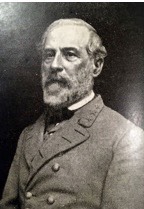
But there was other work for Colonel Lee to do. He was made superintendent of the great military school at West Point, where he had gone as a student twenty years before. Here he stayed for three years, teaching and training the boys who should one day become officers in the army.
Away out on the plains of Texas the Comanche Indians were giving trouble. Of all the Indians in Texas the Comanches were the most savage and cruel. They ate "raw meat, slept on the ground, and were great thieves. Without warning, they would sweep down upon the small white settlements, kill and scalp the settlers, and drive off their horses and cattle. The whole country was filled with terror by these raids.
A messenger was sent to Washington to ask. the President for help. No one was thought to be so well fitted for this work as Colonel Robert E. Lee. He was put in command of the Second Cavalry, and sent at once to the aid of the Texans.
Lee was an engineer. For more than twenty years he had been working in that branch of the service. He liked it, and it was with much regret that he gave it up. But his likes and dislikes were not to be thought of. Where duty called, there it was his place to be. Duty with him stood before everything else. In a letter to one of his sons,.written from Texas, he said: "Duty is the sublimest word in our language. Do your duty in all things. You cannot do more; you should never wish to do less. Never let me or your mother wear one gray hair for any lack of duty on your part."
His command was stationed at lonely forts out on the western prairies. For miles and miles on every side the country stretched till earth and sky seemed to meet. Not a house, not even a tree, was to be seen. There were no railroads and no telegraphs, and news from the great world seldom reached the forts. The United States mail was carried by armed soldiers on small mules. These mail carriers were often attacked and killed by the Indians Their mail sacks were then cut open, and the precious letters and papers were scattered over the prairie.
Besides the loneliness of the country, the trying weather caused the soldiers much suffering. The sun was very hot, the air like a blast from a furnace, and the water salt Many of the men got sick, and a bright little boy, son of one of the soldiers, died. Colonel Lee spent the Fourth of July under his blanket, raised on four sticks driven in the ground, as a sunshade.
At other times fierce northers would sweep over the plains, leaving death and destruction behind them A kiss of their icy breath, a touch of their snowy fingers and man and beast alike sank down and died.
He is never lonesome who has the company of noble thoughts. Some natures find good in everything. Such a nature was Lee's. In the midst of the desert, he found pleasure in his own thoughts, in the plumage of the birds and the beauty of the flowers. Neither winter's chilling touch nor summer's burning breath could draw from him one word of complaint. Of evil he would not think, and the good was ever before him. There was sunshine in his soul.
To Mrs. Lee he wrote: "We are all in the hands of a kind God who will do for us what is best." "Do not worry yourself about things you cannot help." "Lay nothing too much to heart." "I feel always as safe in the wilderness as in the crowded city. I know in whose powerful hands I am, and on Him I rely."
To his children he wrote delightful letters about dolls and cats and ponies and other things that children like to hear about. One Christmas he wrote to his wife: "I hope you had a joyous Christmas at Arlington. I thought of you all, and wished to be with you. I tried to find some little presents for the children in the fort, but had hard work of it. The stores here keep few such things. But by taking a week beforehand in my daily walks I picked up, little by little, something for all. Tell Mildred I got a beautiful Dutch doll for little Emma Jones — one of those crying babies that can open and shut its eyes.
For the two other little girls, Puss Shirty and Mary Sewell, I found handsome French teapots. I satisfied the boys with knives and books."
To his youngest daughter he wrote: " I want to see you so much. Can you not pack up and come to the Comanche country? I would get you such a fine cat you would never look at' Tom' again. I saw in San Antonio a cat dressed up for company. He had two holes bored in each ear, and in each were two bows of pink and blue ribbons. His round face, set in. pink and blue, looked like a big owl in a full-blooming ivy bush. He was snow white, and wore a gold collar around his neck. His tail and feet were tipped with black, and his eyes of green were truly cat-like."
One morning a letter was brought to Lee which troubled him greatly. At the same time it gave him pleasure. It was from the President, calling him home at once. It gave him pleasure because he should now be with his family again. For many years a quarrel had been going on between the States of the North and the States of the South. What the quarrel was about would take too long to tell here. For a long time it had looked as if there would be a war between the States. Lee feared there would be war, and this was what troubled him. He feared he had been called home to fight in this quarrel; and this
he did not wish to do. He did not wish to fight against the North; he could not fight against the South. When he reached home, he found that his worst fears were true. The people were wild with excitement. Everywhere there was talk of war.
Both sides wanted Lee's help. General Scott, his old commander in the war with Mexico, said he would be worth 50,000 men to the North. President Lincoln offered him the chief command of the Northern armies, and General Scott begged him to take it.
But he could not do it. Virginia, his own beloved State, was on the other side. He could not fight against her. He said, "I cannot fight against my relatives, my children, my home. I have been a soldier of the United States, but I am a son of Virginia, and I must do as my State does."
For thirty years he had belonged to the United States army. For thirty years he had fought, under the starry banner of the Union. For that same banner his blood had been shed, and he loved it with a true soldier's devotion. But he could not fight against his home even under its starry folds.
It cost him many a pang to quit the service, but duty called him to do so, and he obeyed without question. He gave up his position as colonel in the United States army, and went back to his home at Arlington. From here he wrote to his brother: " I am now a private citizen. Save in defense of my native State, I have no desire ever again to draw my sword."
But he was not allowed to remain a private citizen. The war was on, and Virginia needed him. He was made major-general of the Virginia troops, and then commander-in-chief of all the Southern armies.
The States of the South were called the Confederate States, and those of the North the Federal States.
Jefferson Davis was President of the Confederate States, and Richmond, Virginia, was the capital city. Abraham Lincoln was President of the Northern States.
The soldiers of the North wore a uniform of blue, while those of the South wore gray; and they were sometimes called "the blue" and "the gray."
These were stormy times. " The drums beat all day long. Flags waved in every direction. Trains were loaded with armed men going to battle and to death. Men and women wept in the streets as they cheered the boys who were going off to the war."
The first gun was fired at Fort Sumter in South Carolina, April 12,1861.
The war lasted four years. Many great battles were fought, and thousands of brave men lost their lives.
When the Northern armies invaded Virginia, General Lee did all that man could do to drive them back. His men fought as soldiers had never fought before. All the world wondered.
Four times great Union armies, commanded by the best generals of the North, were sent against him, but he proved more than a match for them all.
Once again a mighty army was raised, and General U. S. Grant was placed in command. Grant knew Lee well; they had been in the Mexican war together. He knew that to win he must fight hard, and keep on fighting. When he was asked how long it would take him to get to Richmond, Grant said, "Well, about four days if General Lee is willing; if he isn't, it will take a good deal longer."
Grant had more than twice as many soldiers as Lee. They were well armed, well drilled, and well clothed. They were fresh and ready for action. A wagon train of provisions and supplies, sixty-five miles long, went with them. Lee's troops were worn out with constant march ing and fighting. They were short of ammunition. They were ragged and barefoot. They often had nothing to eat save a few grains of parched corn. And now the most dreadful battles of the war took place. Neither side would give up. Grant was determined to take Richmond; Lee was determined that he should not. Once when things seemed to be going badly for Grant, he was asked what he meant to do. " Fight it out on this line, if it takes all summer," he replied.
In the great battle of the Wilderness, when all seemed lost to the Confederates, General Lee rode to the front. The very ground shook with the thunder of. the guns. A thick veil of smoke hung over the field, as if to hide the dreadful work that was going on. High above the roar of the cannon could be heard the clashing of swords, and the musketry's rattle; the shouts of the soldiers as they urged each other on; and the cries of the wounded as they sank down to die.
Something must be done, and that quickly, if the army was to be saved from ruin. Turning to the soldiers around him, Lee asks: " What boys are there? " "Texas boys," is the quick reply. "Well, my Texas boys, you must charge."
A wild yell breaks from the ranks of the Texans. Their blood catches fire as they hear Lee himself give the order to charge. They rush forward like a whirlwind, bearing everything before them, while Lee rides at their head, waving his old gray hat and urging them on.
The men see their leader's danger, and shout for him to go back. On him the hopes of the South are fixed. Should he fall, all would, indeed be lost. From a thousand throats leaps forth the cry, " Go back, General Lee; go back!" "Lee to the rear! Lee to the rear!"
Lee seems not to hear. His eyes are fixed upon the enemy's lines. His thoughts are bent on victory. With sword raised high in air, and still waving his old gray hat, he rushes forward, crying, "Charge, boys, charge! "
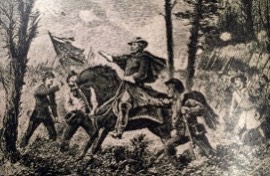
And now a strange thing happens. A tall, lean, ragged Texan sergeant moves quickly from the ranks, seizes the general's horse by the bridle, and turns his head to the rear.
Lee's heart was touched. The tears welled to his eyes. These brave fellows were willing to die for him if he would only spare himself. He must do as they wished. So he rode away to another part of the field.
Yelling like madmen, the Texans continue the charge. They are shut in by a circle of fire. The very clouds seem to rain bullets. Half of their number fall within ten minutes. The enemy's lines give way before them, and the day is saved.
Afterward General Lee said to one of his aides, "Get me more Texans and I will feel more sure of victory." But what Lee gained in one way he lost in another. Many of his men were killed and wounded, and there were no others to fill their places. His grand army of sixty thousand men that first met Grant melted away to nine thousand. These were ragged and starving. Grant had all the men he wanted. When one of his soldiers was killed, there were always fresh ones ready to take his place. More than two hundred thousand Federal soldiers stood facing Lee's little army in front of Richmond.
Step by step Lee was pushed back. One morning news was brought to him that the troops in front were not able to fight their way out. At these words a great sadness fell upon Lee. He saw that the end was near, and it al most broke his heart. He felt that it would be wrong to allow any more of his brave soldiers to be killed when there was no hope of winning. "There is nothing left," he said, "but to go to General Grant, and I would rather die a thousand deaths."
Dressing himself carefully in a new suit of Confederate gray, he rode out to meet General Grant. The meeting place was a farmhouse midway between the lines of the two armies.
After talking over the situation, General Lee decided to surrender. His army was not whipped — it had never been really whipped — but outnumbered. There was no longer any hope of winning. It would be a useless waste of life to keep up the fighting.
General Grant did not gloat over his victory. He was very kind to General Lee and his men, and made the terms of surrender as easy as he could. All he asked was that General Lee should promise for himself and his soldiers not to fight any more against the United States. He did not take General Lee's sword. The men gave up their guns, but General Grant told them they might take their horses home with them, "to work their little farms."
When the papers had all been signed, General Lee told General Grant of the starving condition of his troops; that for several days they had had nothing to eat but parched corn. Grant at once gave orders to his soldiers to share their rations with the Confederates. Soon the strange sight was seen of men who for days and weeks had been fighting each other, good-naturedly chatting and eating together.
After thanking General Grant for his kindness, Lee rode away to break the sad news to his troops. When the soldiers saw their good general coming back — a prisoner of war, —their grief was heart-rending. They crowded around him, trying to take his hand, touch his person, or even to lay a hand upon his horse. Tears were running down every cheek.; Strong men were sobbing as if their hearts would break. Between the sobs prayers were heard calling down the blessings of heaven upon their beloved leader. " God bless him! " " God help him! " "God bless 'Marse Robert'!" went up from thousands of hearts.
With head bare and tears streaming from his ,eyes, Lee took leave of his army. In a tone trembling with sorrow he said: "Men, we have fought the war together. I have done my best for you. But it is all over now, and you can return to your homes in peace. I earnestly pray that a merciful God will extend to you His blessing and protection. Farewell! "
This surrender happened at a place called Appomattox Courthouse, in Virginia, on the 9th day of April, 1865.
A few days afterward Lee rode into Richmond, where his wife was staying. The people heard of his coming, and lined the roads to see and welcome him. Though defeated and a paroled prisoner of war, they loved him still.
General Lee lost almost everything he owned by those four dreadful years of war. Beautiful Arlington had been captured by the Federals, and he had no home to which he could go and rest. A kind friend in Richmond tendered him a house, and here he and his family lived for awhile.
He longed for quiet, and this could not be had in the city. To a friend he wrote:"I am looking for some little quiet house in the woods, where I can procure shelter and my daily bread."
The "quiet house, in the woods" was found, and in June, 1865, Lee and his family moved into it. After so many years of toil and strife, this quiet was delightful. It was Lee's wish' to pass the remainder of his days here, taking no part in the affairs of the great world outside. He was getting old, and he felt that his work was done.
But not so thought the world. It was not ready to spare him yet. It had other work for him to do. He was elected president of Washington College, Lexington, Virginia. He had led the fathers to battle — he was now to lead the sons in the paths of peace and learning.
When it became known that General Lee, was at the head of the college, hundreds of young men from all over the South flocked to Lexington, that they might have him for their teacher. And such a teacher as he was! So gentle, kind, patient and thoughtful of others. His own life was as good a lesson as anything that could be learned from books. His students loved him as much as his soldiers had done. They honored him above all men, and tried to be as good and true and noble as he was.
And all the love of his great heart was poured out on the college and on his boys, as he called the students. For them he thought and planned and worked and prayed. He wanted this to be the best college, and these boys the best men in the whole country.
Thus he lived and labored for five years. Then the end came. The great and good man, the splendid soldier, the quiet, modest college president, closed his eyes on earthly things, and his pure spirit went home to rest with God.
He died at half-past nine o'clock October 12, 1870, in the sixty-fourth year of his age. "He died of a broken heart, caused by the surrender at Appomattox, the sorrow of the South, and the grief of his friends."
Just before he passed away he was heard to murmur in his sleep, "Tell Hill he must come up. "Once more, in thought, he was among his much-beloved soldiers, and was fighting over again the dreadful battles of the war. Tolling bells broke the sad news to the people of Lexington, and electric wires flashed it round the world — " Lee is dead! Lee is dead! "
The hearts of all mankind were bowed, with grief. Everywhere throughout the South there were signs of deepest mourning. All business was stopped. The schools were closed. Great meetings were held to express the grief of the people. The Legislature of Virginia made his birthday a holiday. In honor of his memory, the trustees of the college changed its name to Washington and Lee University.
His body was laid to rest in a brick vault in the college chapel, October 15,1870. A few years afterward, his wife and his daughter, Agnes, were laid beside him.
Above the vault, on a pedestal of pure white marble, lies the figure of Lee, the soldier, taking his rest, with his martial cloak around him. One side of the pedestal bears this inscription:
Robert Edward Lee,
Born January 19,1807; Died October 12,1870.
==========