STEPHEN F. AUSTIN
Stephen Fuller Austin was a native of Virginia. He was born at Austinville, Wythe county, November 3, 1793. His father was Moses Austin, a native of Durham, Connecticut, who married Miss Maria Brown of Philadelphia. The family consisted of three children— Stephen Fuller, the eldest, Emily Margaret and James Brown.
Moses Austin was educated a merchant, and carried on that occupation for a number of years at Philadelphia and Richmond, Virginia. Shortly before Stephen was born, he removed to Wythe county, where he had bought a lead mine, and began the manufacture of shot and sheet lead. He was a man of strong character, full of energy and determination. The idea of forming in Texas a settlement of people from the United States was first thought of by him, and he, instead of his son, might well be called the "Father of Texas."
When Stephen was six years old, the family removed to the distant and then unknown country of Missouri, where his father bought other lead mines. Missouri at that time was a perfect wilderness. Few white people lived there, and they were long distances apart. At the place where the Austins settled, (now Potosi, Washington county) there was only one other white family. The country was full of wild Indians, who kept the settlers in continual fear for their lives. Sometimes they would suddenly appear before the white man's cabin, kill and scalp the father, and carry the mother and children away into captivity. You may read in a larger history of Texas how Lizzie Ross and Cynthia Ann Parker were thus carried away.
Little Stephen often saw the Indians galloping over the prairies chasing herds of buffaloes, and their terrible war whoop was a familiar sound to his ears. When he was eight years of age, a large band of Osages attacked the settlement, purposing to rob Mr. Austin's house and store and kill all the whites found there. But Mr. Austin expected them, and was prepared for them. He had provided himself with plenty of guns and ammunition and a small cannon, with which he soon succeeded in driving them away.
There were few schools in Missouri at this time, and the first to which Stephen was sent was forty miles away from his home. When he was eleven years old he was sent to school to Connecticut, his father's old home. At first he received private lessons from the Rev. Horace Holley, the minister at Springfield and a very learned man; then, for three years, he attended the academy at New London. His studies were completed at Transylvania University, Kentucky, when he- was seventeen years of age.
His school days over, Stephen returned home to "Durham Hall," as Moses Austin's house was called, and en gaged in business with his father, smelting and manufacturing lead. The nearest market for the products of the mine was New Orleans. Once or twice a year a large boat was loaded with shot, pig, bar and sheet lead, and floated down the Mississippi to that city, where the cargo was sold. These voyages often occupied many months, and were full of dangers. Sometimes a boat would run aground on a sand bar, where it would have to remain until a rise in the river floated it off; sometimes it would be dashed to pieces on a sunken tree, or upset in the rapids and whirlpools.
When Stephen was nineteen years old his father gave him charge of a boat and started him to New Orleans. For a while all went well; then a storm arose. The wind blew a hurricane and the rain fell in torrents. The river was much swollen and the angry currents tossed the boat about like a plaything. At last the boat sank, and Stephen barely escaped with his life. He got ashore on the plantation of General Wade Hampton, who treated him with great kindness and gave him every assistance. He stayed here till the river fell. Having procured an-, other boat and raised his cargo, he proceeded-on his journey without further accident, returning home during the winter by land.
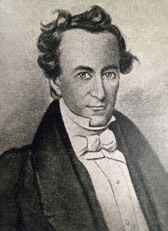
One who knew Austin at this time describes him as a young man of much promise. He was educated, gentle manly in his manners, kind and gentle in disposition, and a hard worker. These qualities soon won for him the good will of his neighbors, and when but twenty years of age he was elected to the Missouri legislature. They were so well pleased with him that he was returned again and again for six years. While in the legislature he was distinguished' for his strength of mind, good sense and business habits. He was straightforward and honest in his dealings with all men. An eminent man who served with him in the legislature wrote of him: "Never during all these years did I ever hear of his truth, honor or integrity being called in question."
Austin now moved from Missouri to Arkansas to open up a farm. His good name followed him, and the people here soon learned to love and trust him as those at his old home had done, and within a year he was elected judge. About this time Moses Austin, by the failure of the Bank of Missouri, lost everything he had—money, mines, home-and at the age of fifty-five found himself a poor man, compelled to begin life over again. From Indian traders and trappers he had heard glowing accounts of the rich soil and delightful climate of Texas; so he resolved to take some of his countrymen there and make a settlement.
Texas belonged to Spain, and, before making the settlement, it was necessary to get permission from the Spanish authorities at Sari Antonio. In the fall of 1820, he visited Stephen F. Austin in Arkansas and engaged his assistance in the undertaking. Stephen was to give up his farm and go to New Orleans to get colonists for the new settlement while his father went on to Texas.
When Moses Austin reached San Antonio, he was coldly received by the governor and ordered to quit the country at once. By no persuasion could he get the governor to look at his papers of recommendation or listen to his plans. He must leave immediately. Greatly disappointed and for once in his life utterly discouraged, he was crossing the public square on his way back to the place where he had left his horses, when some one accosted him, "Are you Moses Austin? I am Baron de Bastrop. If you remember, we met several years ago when I was traveling in the United States. You look downcast. What has happened? Can I be of any assistance to you?" Austin turned, and, recognizing De Bastrop", told him of his reception by the governor, and that he was on his way back to Missouri.
Bastrop begged him not to go; invited him to his house; looked over his papers; listened to his plans, and promised to see the governor for him. He did so, and in a few days Austin left for Missouri with the assurance that his request would be granted.
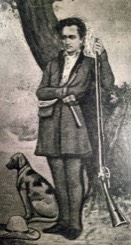
Missouri was a long way from Texas in those days, and Austin's homeward journey, made on horseback in the dead of winter; was accomplished with much difficulty. The country through which he traveled was an unsettled waste, haunted only by the wild Comanche1 Indians, the sworn enemies of everybody, especially the white man. The weather was very severe. One day he would be soaked with rain, and then, before his clothes could dry, a cold norther would come sweeping over the prairie, coat ing him in garments of ice and almost freezing him to death. The creeks and rivers were swollen, and had to be crossed by swimming or on rafts. He was robbed of his provisions by parties who were traveling with him, and, his powder having been damaged by the rain, he could kill no game; and for more than a week he was obliged to go without food except the acorns and roots he could gather in the woods.
When he got home his health was ruined, and shortly afterward he died, June 10, 1821. A few days before his death, however, he heard the welcome news that permission had been granted him to settle three hundred families in Texas; and one of his last requests was that his son, Stephen, should carry out his plans.
Stephen F. Austin was in New Orleans when he heard of his father's death. He immediately set out for San Antonio to see the governor and arrange for taking out the colonists. The governor received him kindly and gave him permission to select any place he might wish for the location of his colony. He chose the rich lands lying between the Brazos and Colorado rivers, south of the old San Antonio road.
He then returned to New Orleans for his settlers. A boat load of provisions was sent ahead, as there was nothing in the country for the people to eat. The supplies were landed at the mouth of the Brazos and hidden in the bushes, and the boat returned for another load.
Austin and his colonists reached the Brazos on New Year's Day, 1822, and commenced the new settlement in the midst of a wilderness. It was not a very happy New Year for them. Their provisions had been stolen by the Indians, and they had nothing to eat except the game the hunters could kill, such as buffalo, bear, deer, turkey and wild mustang horses. The presence of Indians in the country made buffalo hunting quite dangerous; bear and deer were very poor and scarce; mustang horses, however, were plentiful and fat, and for two years they formed the main article, of food.' There was no bread or salt; and as for sugar, coffee, etc., such things were to be had only in dreams. Long and anxiously the settlers looked for the return of the boat from New Orleans, but all in vain. Nothing was ever heard of her afterward, and it is supposed that she was lost at sea with all on board.
These were trying times to the colonists, but they were not discouraged. With brave hearts they set to work felling trees, burning underbrush, building themselves log cabins, and laying off fields in preparation for the spring planting.
A few months after his arrival on the Brazos, Austin went to San Antonio to make a report to the governor. There he learned that a new government had been set up in Mexico that was not friendly to his plans; and that he must go at once to the City of Mexico and get his grant renewed. Austin was greatly surprised at this news and wholly unprepared for such a journey. There was no time to be lost, however, and, leaving Josiah H. Bell in charge of the settlement, Austin set out with on companion on the long and dangerous journey. The first day they traveled unmolested. On the morning of the second day Austin was not feeling well, and undertook to prepare some coffee.
His companion warned him that if there were Indians near they would be attracted by the smoke from his fire. He thought, however, that by finding a sheltered place and making only a little smoke, there would be no danger of being discovered. They were on a large prairie, and could see many miles around. No living creature was in view but themselves. Christie, his companion, went to seek their horses, which had been hobbled the night be fore and turned loose to feed. Austin himself retired to a little ravine to enjoy the coffee. He was just raising the cup to his lips when he heard a sound like the trampling of many horses. He thought it might be a herd of buffaloes or wild mustangs; but, on raising his head, he saw in the distance about fifty Comanche warriors dashing toward him at full speed. He was quickly surrounded, and the plunder of his camp commenced. Every article was greedily seized upon. Austin threw his saddlebags, which held his papers, clothes and money for the journey, on the ground and stood- upon them with his rifle in his hand to protect them. But the odds against him were too great. He was roughly thrust aside by half a dozen warriors and the saddle-bags with their precious contents were carried off. The chief seized his rifle, but Austin held on to it with a firm grip, while in the few Spanish and Indian words that he knew, he declared himself to be an American. Then he asked the chief if his nation was at war with the Americans.
"No," was the reply.
"Do you like the Americans? "
"Yes, they are our friends."
"Where do you get your spear heads, your rifles, your blankets, your knives? "
"From our friends, the Americans."
"Well, do you think, if you were passing through their nation, as I am passing through yours, they would rob you as you have me? "
"No; they would feed me and protect me, and the Comanche will do the same by his white brother." Upon which he commanded his people to restore all the things taken.
The remainder of the way the travelers went on foot disguised as beggars in ragged clothes, to escape the notice of robbers, who in large numbers infested the roads and mountain passes. At night they slept on the ground in the open air and their food was of the coarsest kind.
[Letters from Texas, by Mrs. Mary Austin Holley. ]
After thirty-six days' travel they reached the City of Mexico. Here everything was in disorder. There had been another change in government, and no one seemed to know who was the rightful ruler. It was more than a year before Austin could get a hearing. This time he spent in learning the Spanish language and making friends among the people.
"With patience, everything comes in due season," says the old proverb. Success at length came to Austin. His grant was renewed and he was given full power to make all laws needful for the colonists. He received even more than he asked for; and with the good news he returned to the little colony on the Brazos.
Austin found the settlement almost broken up. Discouraged by his long absence, many of the people had moved away. Some returned to the United States and some found homes in other parts of the province. Of those who remained several had been killed by the Carancahua Indians, who had become very troublesome. These Indians are described as being very fierce and warlike. They were six feet tall and strongly built. Each warrior carried a bow as long as himself, and so strong that a white man could hardly string one.
There was great rejoicing among the colonists over Austin's return and the good news he brought. They now felt safe and secure in their homes. They wrote letters to their friends in the United States telling of the delightful climate, the cheapness of the land, and the wonderful fertility of the soil; and soon a stream of immigrants came pouring into the colony. Towns sprang up as if by magic—Brazoria, Gonzales, Victoria, Columbia; San Felipe de Austin on the Brazos, which was named after Austin, was made the capital of the prosperous colony.
For ten years Austin watched over and carefully tended the little colony. He had no family of his own, and he devoted himself entirely to his people. Their good was ever uppermost in his mind; and they, in turn, loved and honored him as a father. "He was a welcome visitor at every house, and, when 'the Colonel' called, the visit was spoken of for a long time in the family and neighborhood. Every child of every colonist was known to him, was eager to welcome him and to be permitted to play upon his knee."
Contented and happy, busy with ploughing and sowing and reaping, the people were all unconscious of a storm that was gathering in the west and darkening above their homes. There arose a new ruler over Mexico, who was unfriendly to the Americans and began to ill-treat them in many ways. They were made to pay very high taxes. Their friends and relatives in the United States were no longer permitted to settle in the colony. Their arms were taken from them, and they were thus left at the mercy of Indians and other bad characters that infested the country. Large bodies of soldiers,, who behaved in a very insulting manner, were quartered among them. Many of the colonists for no cause were arrested and thrown into prison.
These acts of the Mexican government created great excitement in Texas, and meetings were everywhere held to protest against the injustice. A meeting was held at San Felipe in April, 1833 at which it was decided to send a petition to the government asking for the repeal of the unjust laws. Austin and two others were chosen to carry the petition to Mexico.
Austin had not forgotten his other journey to Mexico, nor its trials. It would be more dangerous to go now, as all Mexico was stirred up against Americans. But the voice of his people called him to go, and that voice he could not resist.
General Santa Anna, who was then president of Mexico, pretended to be a great friend to Texas; but when Austin arrived at the City of Mexico he would not see him. He was busy plotting to make himself emperor of Mexico, and had no time to listen to such a small matter as a letter from the Texans. Austin tried again and again to see him, but failed each time.
Sick at heart over his failure he started for home. When about half way to San Antonio, he was arrested and taken back to the City of Mexico, where he was thrown into a dark dungeon and not allowed to speak or correspond with anyone. He was kept in this dungeon four months. During this time he was denied light, books, ink, pen and paper. He was then removed to another prison, where he was given more liberty. Here he was visited by Father Muldoon, a good priest who had once ministered to his colonists. Muldoon furnished him with a memorandum book and a pencil and with these he whiled away many lonely hours. Here are some things he wrote:
"What a horrible punishment is solitary confinement, shut up in a dungeon with scarcely light enough to distinguish anything."
"My poor sister; how much she is now suffering on my account! How happy I could have been on a farm near her far from all cares and difficulties that now surround me! But I thought it was my duty to obey the call of the people to go to Mexico as their agent."
"Muldoon failed in his promise to send me books. I prefer bread and water with books, to the best of eating without them. In a dungeon the mind and thoughts require nourishment more than the body." "Time drags on heavily! "
In the darkness of his prison his thoughts were continually of his beloved Texas and how he might do something for her should he ever be set free. But perhaps he should die in prison. Who then would help her? These thoughts, he said, almost crazed him.
Finally, after an absence of two years and four months, Austin once more set foot on the soil of Texas, his health almost ruined by his prison life and anxiety. Great was the joy of his people when they saw him again. "The old pioneers who had come with him into the country and been with him in days gone by, and who had witnessed and partaken of his toils and privations, gathered round and received him as one risen from the dead." All turned to him for advice and guidance.
Austin had been at home scarcely a month when war broke out between Mexico and Texas. Mexican soldiers were sent to take away the arms of the Texans. The Texans would not give them up; they needed them to protect their homes from the Indians. They would die, they said, before they would give up their arms.
The first fight took place at Gonzales, October 2, 1836. The Texans had a small cannon here which the Mexicans were told to take. "Take it if you can," said the Texans, and fired it into the enemy's ranks. They used the little gun so well that the Mexicans were soon whipped. Four of them were killed and many wounded. The Texans lost not a man.
The news of this battle flew over the country as fast as fleet steeds could carry it. "Our fellow-citizens at Gonzales have been attacked! The war has commenced!" was thundered at every door in Texas. At this not unexpected summons men snatched up their guns spoke a few hasty words of parting to their loved ones, and rushed away to obey their country's call. Soon three hundred men were assembled near Gonzales --the country's bravest and best, and each one carried in his breast the stern determination to drive "every Mexican soldier beyond the Rio Grande or whiten the plains with our bones. How it thrills the heart to call over their names! Edward Burleson, Benjamin R. Milan, J. W. Fannin, James Bowie, Henry Karnes, William B. Travis, Francis W. Johnson, Deaf Smith, Alexander Somervell, William H. Jack, John W. Smith, Wm. T. Austin.
With so many leaders who should be the leader? Who but Stephen F. Austin, the man who had brought about the settlement of Texas? The choice was left to the soldiers, who unanimously elected him commander-in-chief of the forces assembled at Gonzales.
General Austin took command of the army, and at once moved against San Antonio, the stronghold of the enemy. The battle of Concepcion took place October 28, 1835, and the Grass fight on the 26th of November, in both of which the Texans were victorious. These victories in spired them with confidence.
The people of Texas were poor. They had no money, and the soldiers needed food and clothes. They must get help somewhere. It was decided to send some one to the United States to ask for aid. Austin was chosen to go. When he was told of his appointment he said: "I go on this mission from a sense of duty. It is a bad example for anyone to refuse the call of the people when the country is in danger. I have been called to go, and I .obey the call." Two days after the Grass fight he resigned from the army and General Edward Burleson was elected in his stead.
The people of the United States received Austin with open arms. He was listened to with the deepest interest, and his tales of Mexican cruelty and oppression kindled a flame of sympathy everywhere.
At New York, Cincinnati, Louisville, Nashville, Mobile, New Orleans and other places men and money were raised and hurried forward to the aid of the struggling colonists. "Austin is doing wonders among us for his country," says a writer of that day; "he is a Franklin in patience and prudence." After much fighting the Mexicans were beaten and Texas became free. Peace once more settled down upon the country. The soldiers laid aside their arms and went back to their homes. Gardens were planted and fields ploughed, and the whole country soon blossomed like a rose.
Austin was happy; his people were free. They now had their own president and made their own laws. General Sam Houston was the first president. Columbia on the Brazos was the capital city.
President Houston needed some assistants in the government, and he chose Austin to be one of them. There was much to be done, but work for Texas was ever a pleasure to Austin. Day and night he devoted himself to his duties, working in a room that was exposed and without fire, though the weather was cold. His health, never strong since his imprisonment in Mexico, could not stand the strain. He took a severe cold, which was succeeded by an attack of pneumonia, of which he died, December 27, 1836, at the age of forty-three years. His last words were: "The independence of Texas is recognized! Don't you see it in the papers? Dr. Archer told me so!" He was buried at Peach Point on the Brazos, not far from Columbia, where a simple marble slab marks the last resting place of — The Father of Texas.
One who knew him well says: "His long suffering for the weal of others; his patient endurance under persecutions; his benevolent forgiveness of injuries, and his final sacrifice of health, happiness and life in the service of his country — all conspire to place him without a rival among the first of patriots and the best of men."
==========